

PalaeoReader
Language- Role
- Technical Product Manager & developer
- Dates
- May 2026 – August 2026
- Tools
- React · FastAPI · SQLModel · Leaflet
Context
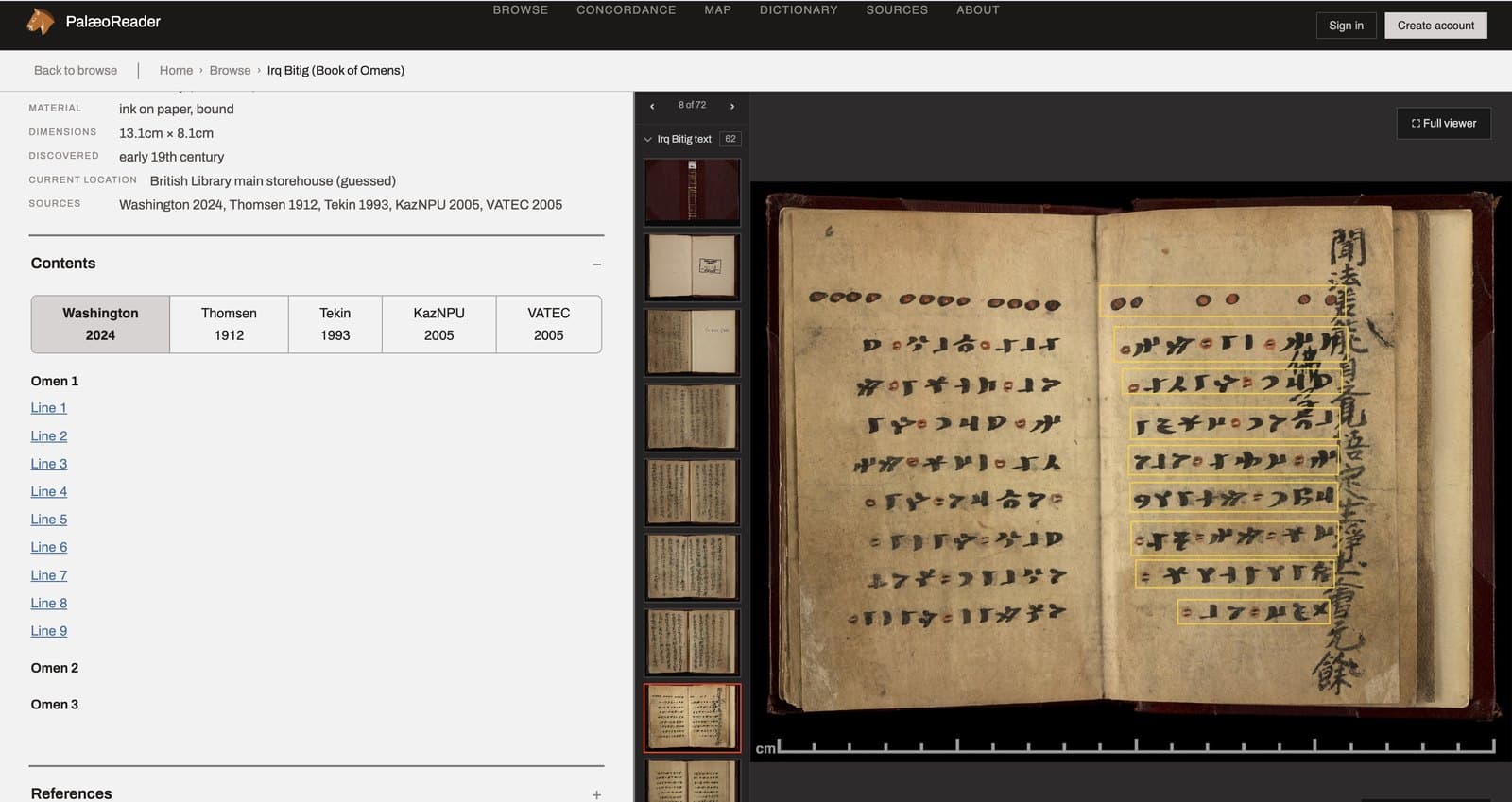
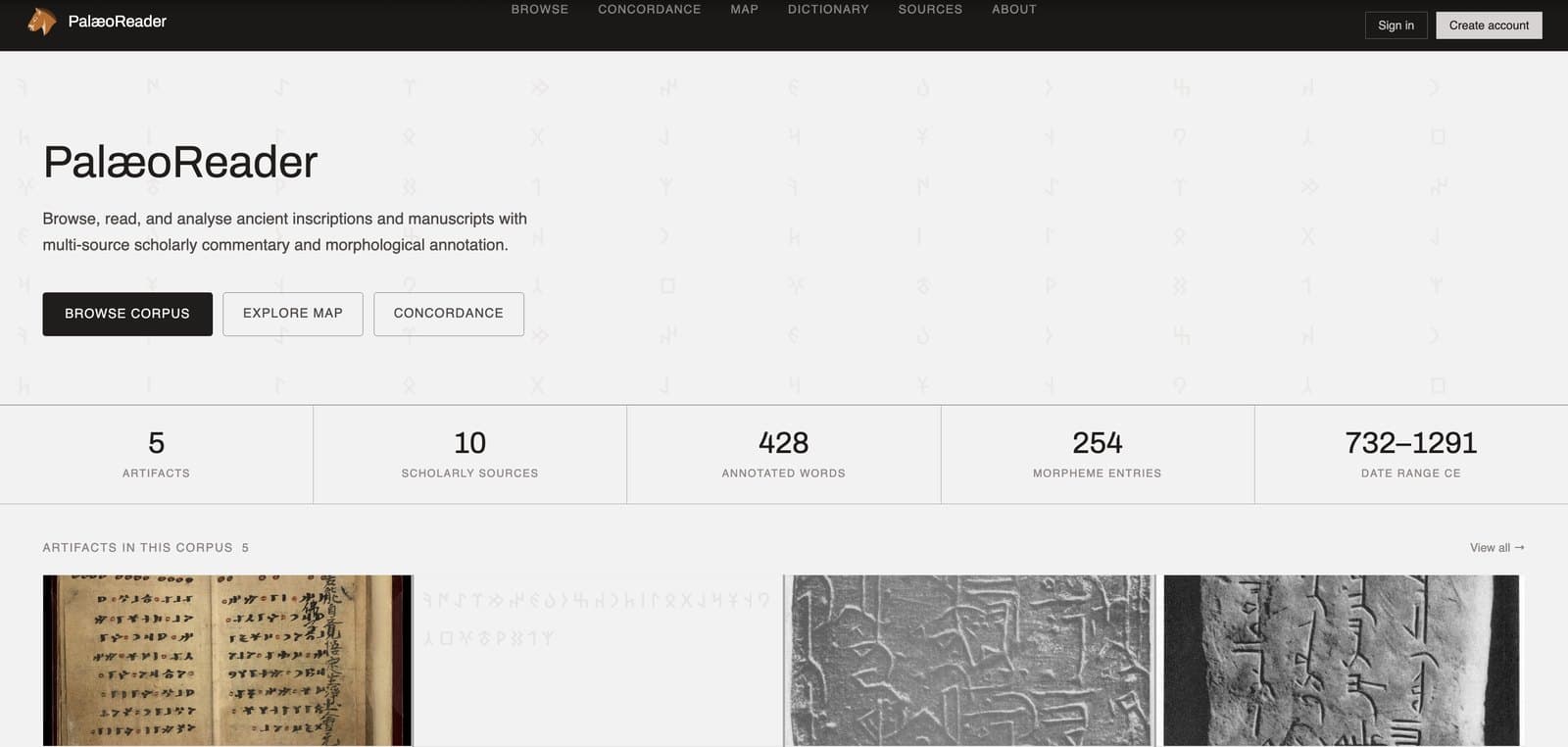
PalaeoReader is a free, open source platform for reading ancient inscriptions and manuscripts, and for arguing about what they say. I worked on it over the summer of 2026 in Swarthmore’s Linguistics Department, supervised by Prof. Jonathan Washington. As the technical product manager, I took it from a concept to a launch and guided feature development with five engineers.
Problem
Before we built anything, I surveyed more than 20 palaeography tools to see what already existed. Almost all of them assume there is one correct reading of a text. None let a scholar put competing readings side by side and see exactly where they disagree, even though that disagreement is the heart of the field. That gap became our differentiator. The other challenge was the audience. The people who would use this are linguists, not software people, so anything that needed a manual or a developer was a non starter.
What I did
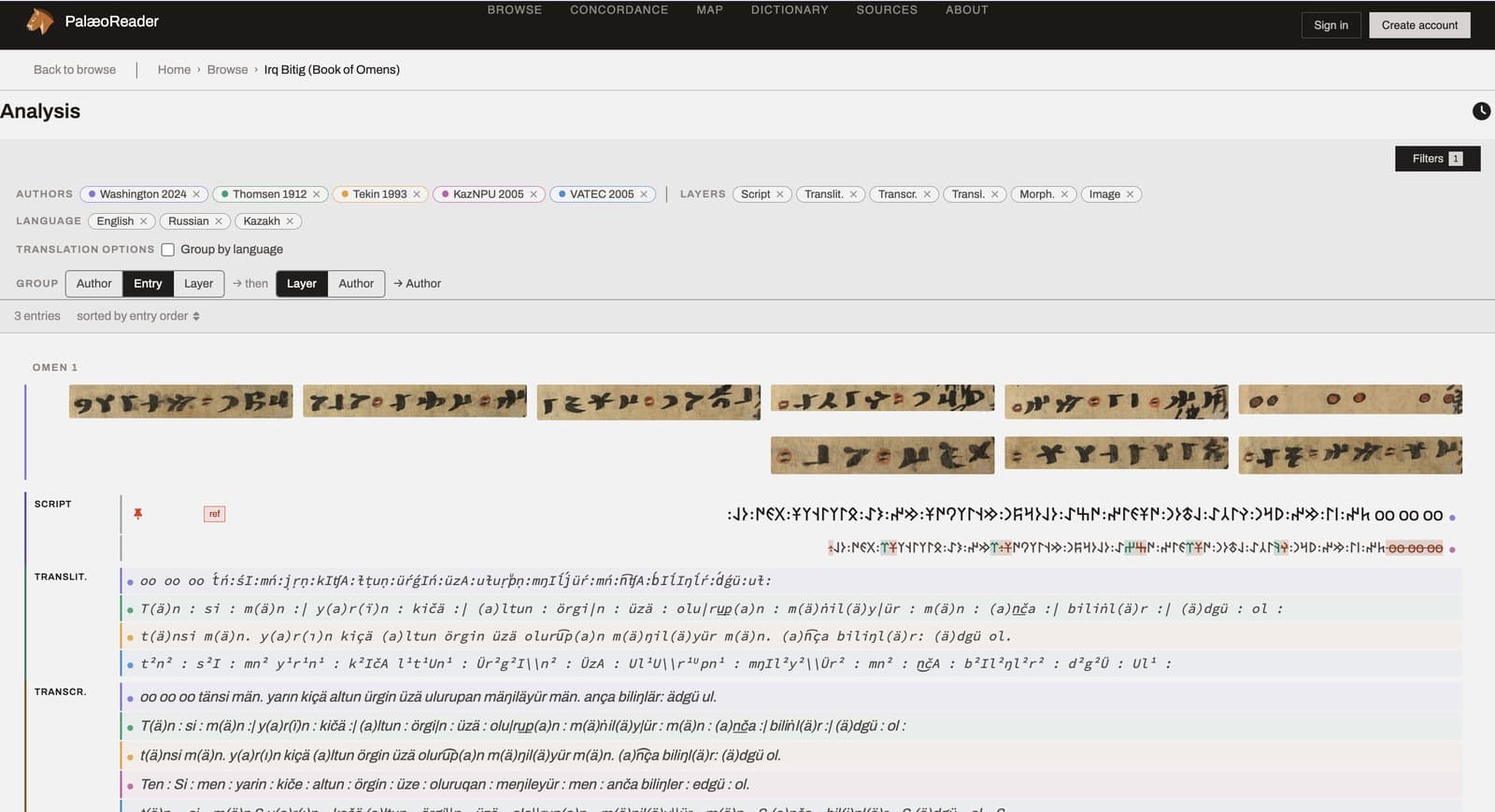
I started by scoping requirements with linguistics faculty, then turned what I heard into priorities the engineers could build against. The goal was an interface that non technical scholars can run on their own, so I cut anything that needed explaining. On the engineering side I built the React interface: a per line diff that shows where two readings part ways, right to left rendering for scripts like Arabic, keyword in context search across the whole corpus, and a map for browsing texts by where they were found. I also worked on the FastAPI backend and designed the PalaeoReader logo.
Outcome
PalaeoReader is still a work in progress, and that is part of what makes it exciting, because there is so much left to build. But it already does what I care about most. It lets a scholar lay competing readings of the same text side by side, layer by layer, and see where they part ways and why.
That matters because disagreement is the heart of this field. These texts are damaged, ambiguous and written in scripts few people can read, yet the arguments about them usually live in footnotes, separate editions and private spreadsheets. Making those arguments visible and comparable could change how scholars check each other’s work, how students learn to read these texts, and how open the whole conversation can be.
It is also open source under the AGPL, on the MediaWiki model, so any institution can run it for their own collection and the people who use it can keep it going long after the funding ends. I’m proud to have helped launch it, and I can’t wait to see what scholars do with it.